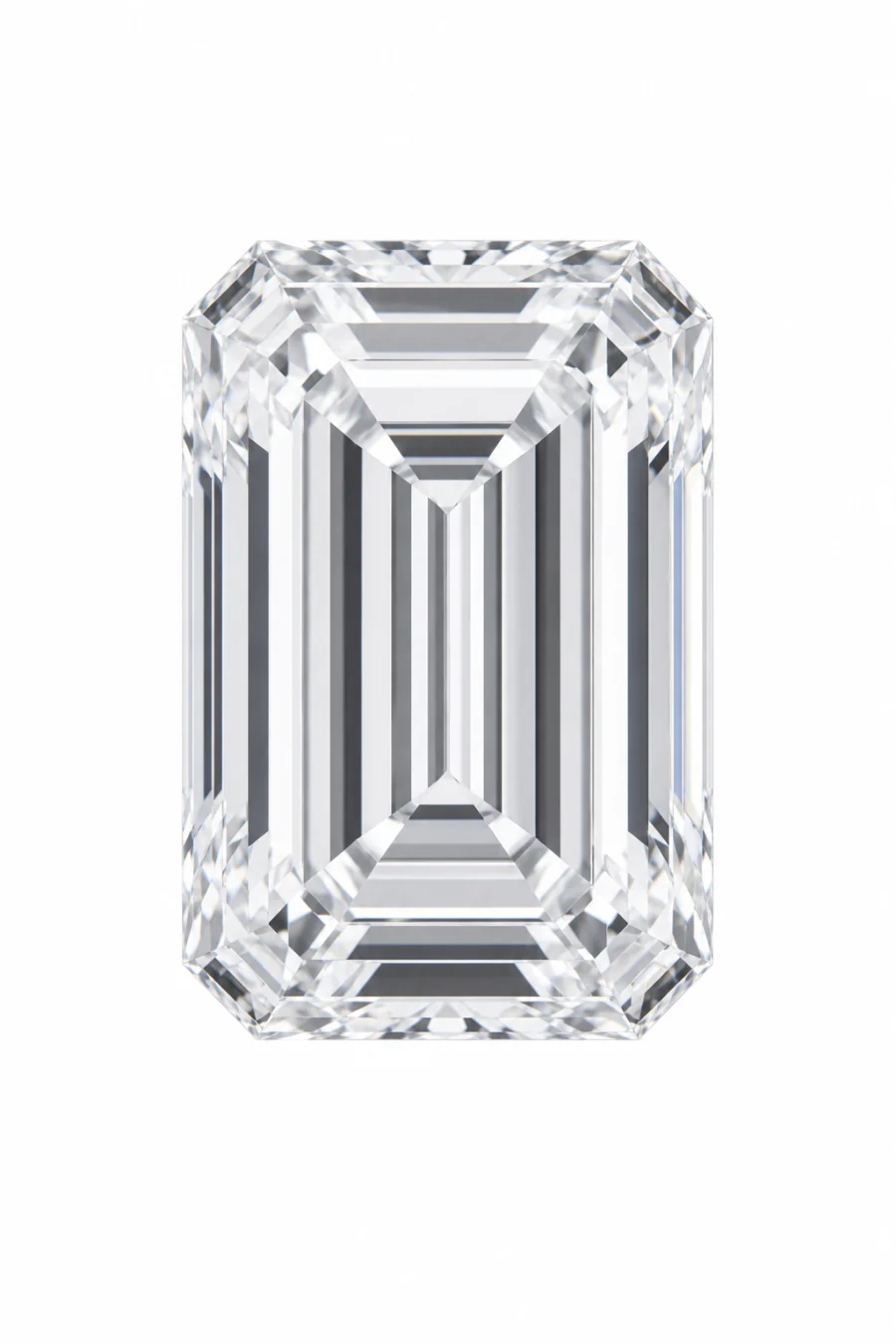
- Cut style
- Step
- Look for
- Compare how long or wide the stone looks, its corners and its reflections.
- Consider the setting
- The clipped corners still need secure support from the setting.
Emerald shape selected. Step cut style.
Diamond guide
Learn about diamond shapes, sparkle and settings before choosing your ring.
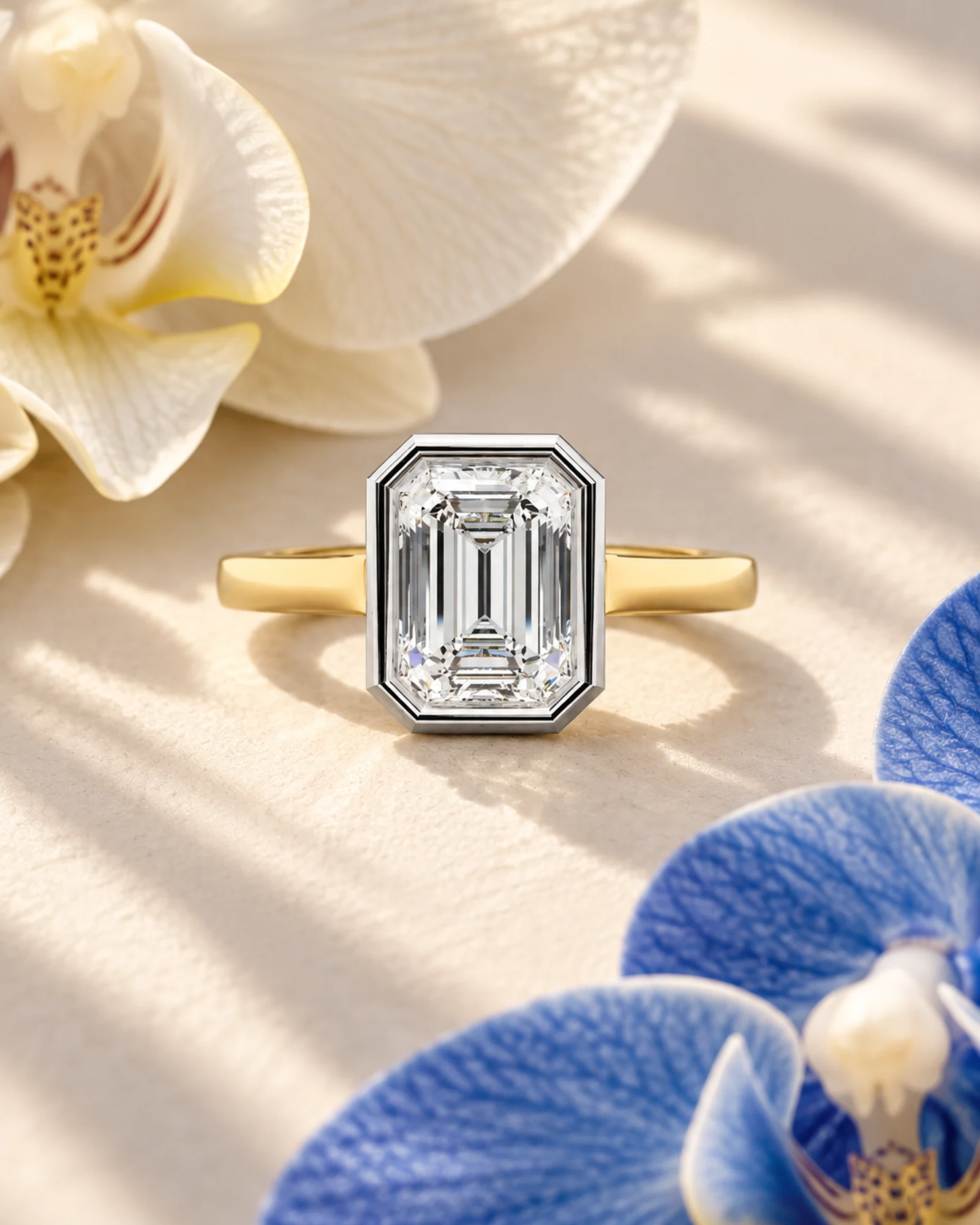
Selected shape · Step faceting
Long facets. Clear reflections.
Try a single-stone setting, a metal rim (bezel) or a stone set across the finger.
The clipped corners still need secure support from the setting.
02 / See the difference
Compare their shapes, reflections
and suitable settings.
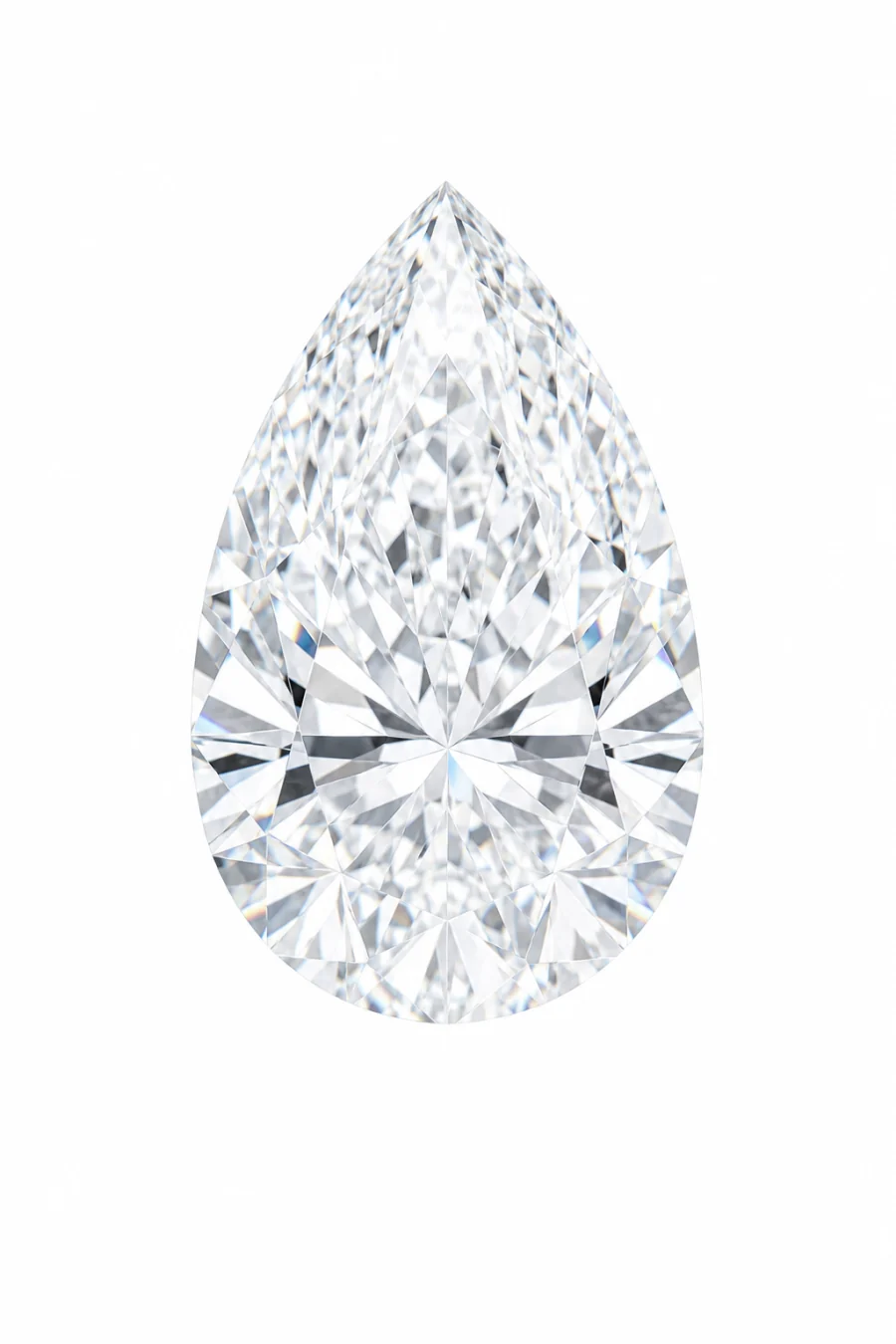
These examples are shown at a similar height. They do not represent equal weights or actual sizes. Each diamond’s shape and facets can vary.
03 / The four Cs
Explore a round diamond.
Change one detail and see the difference.
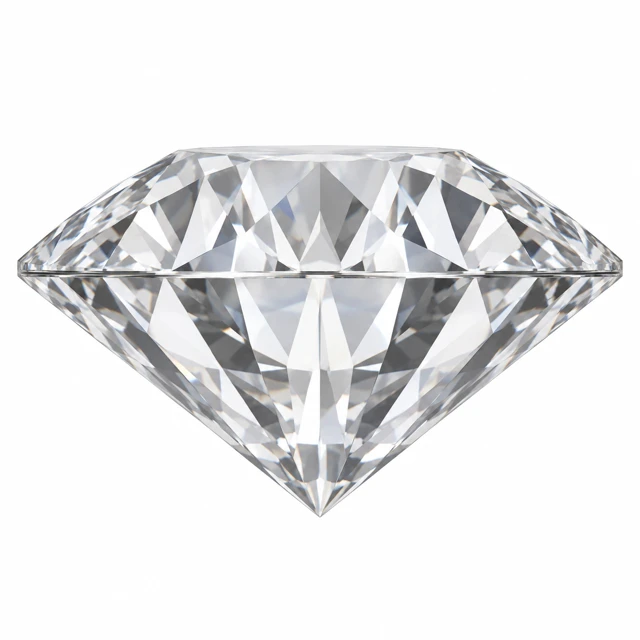
Generated profile above; calculated section below. Only the diagram responds to the light control. Neither predicts sparkle or a cut grade.
01 / Understanding cut
Change the angle of the lower part of the diamond, called the pavilion. See how light travels through the stone.
Explore the section, then move the light. Proportions work together; one angle cannot tell you a diamond’s cut grade.
Rays use Snell’s law and total internal reflection with a refractive index of 2.42. The section keeps a 56% table, 34.5° crown and 3.5% girdle. It omits 3D facets, dispersion and partial surface reflections. Reference is a model setting, not a GIA grade.
Material properties · GIA ↗04 / Origin
Ask how the diamond was formed
and how its origin is confirmed.
Natural diamonds form deep in the earth over a very long time. Knowing a diamond is natural does not tell you where it was mined. Its country of origin needs separate evidence.
Ask: what documents confirm this diamond’s origin?
Lab-grown diamonds are made in controlled conditions. They have the same crystal structure and nearly the same chemical, optical and physical properties as natural diamonds, but form in a different way.
Ask: how was this diamond grown, and has it been treated?
Moissanite and cubic zirconia can look like diamonds but are different materials. You cannot reliably tell a diamond’s origin just by looking at it. Read GIA’s explanation ↗
05 / Read the details
A laboratory report describes the diamond. Read it while looking at the stone you are considering.
Open GIA Report Check ↗Use the issuing laboratory’s own verification service. Report fields and grading systems can differ by laboratory, report type and issue date.
Check the laboratory, report number and date. Compare the stone’s measurements and, where present, its inscription with the report.
Review shape, weight, dimensions, color and clarity information. Look for polish, symmetry, fluorescence and any treatment comments. Not every report includes the same fields.
Confirm whether the material is natural or laboratory-grown. A standard grading report does not automatically establish a natural diamond’s country of origin.
Ask to view it in different lighting and at normal viewing distance. A report supports the conversation; the appearance and setting still deserve your attention.
06 / Make it personal
Do you notice the shape, the sparkle or how the ring feels on your hand? Start there, then compare the other details.
Ask to see alternatives within a budget you feel comfortable with. Balance the stone, setting and craftsmanship as a whole.
Discuss exposed tips, setting height and how often you will wear the ring. Choose a setting that suits your daily life and the look you like.